Thursday, March 9, 2023

INDUSTRIAL CONTEXT: A TIMELINE/HISTORY OF FILM MAGAZINES

 TRADE MAGAZINES:

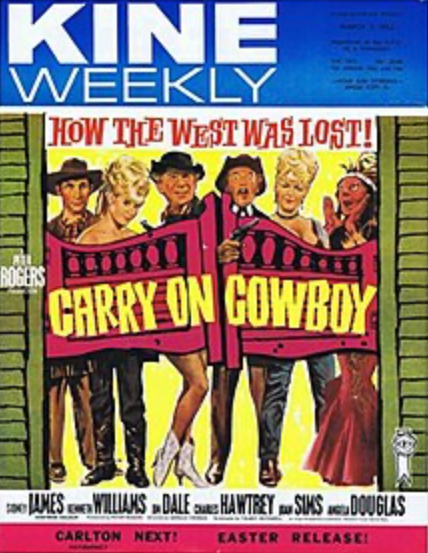
KINE WEEKLY 1989: Began as Optical Magic Lanter and Photographic Enlarger but rebranded to Kine Weekly in 1907. Lasted until 1971. Owned by Odhams Press a British publishing company. Contained trade news, advertisements, reviews, exhibition advice, and reports of regional and national meetings of trade organisations. It was increasingly popular due to its display of  box office data.


TODAY’S CINEMA/DAILY CINEMA 1957: This was the American owned magazine that started out as Daily Cinema in 1957. The content was similar to Kine Weekly because it was also designed mainly target those who worked in the film industry - either in production or those working on releasing the film ion theatres (exhibition). This continued until 1975 when it was rebranded to Todays Cinema.


SCREEN INTERNATIONAL 1975: Started from the rebranded Today's Cinema, which had bought and absorbed Kine Weekly. It became a weekly Business to business brand reporting on industry specifically for the UK film industry but sometimes developments globally. Currently owned by EMAP and now has a website: screendaily.com. This remains the UK's main industry paper with its rivals being the US based Variety and Hollywood Reporter.


FAN MAGAZINES: 

MOTION PICTURE STORY MAGAZINE 1913: This was a very early fan magazine that aimed at the silent movie going audience. It ran from 1913-14. Rather than providing news and reviews, this told the stories of the current films - letting fans to hear the plot without physically seeing the films. In the late teens the magazines moved to focus not on the films but the actors and stars themselves.


PICTUREGOER 1913: With emphasis on the stars rather than the films, Picturegoer was aimed at a female audience. It started as a serious record of films on in the UK but focused more on the glitz and glamour through the 40s and 50s. TV increasingly became the main source of entertainment for women from the 50s onward as they stayed at home and eventually Picturegoer merged with a pop music magazine called Disc Date. It ran until 1960.


EMPIRE 1989: 
Today the focus is partly on the stars but also about appreciation of film - the outcome is the more male targeted magazines such as Empire, which began as a review magazine but eventually drew on ideas from gaming magazines with editor Colin Kennedy, becoming, for the majority, more male orientated. Empire currently has an audience of 194,000.


HIGH BROW MAGAZINES:

MONTHLY FILM BULLETIN 1934: This ran from 1934 to April 1991. It began as a  listing magazine for what was on in the UK cinemas and to inform cinema managers of what was coming up, but changed its angle to a more critical view in the 1950s with editor David Robertson. This developed throughout the '70s taking on auteur theories and looking into the Marxist film ideologies, giving the magazine an art-house audience and analytical tone. MB merged with Sight and Sound in 1991.


SIGHT AND SOUND 1934: Sight and Sound is published by the BFI which is a charity whose purpose is to promote the art of film in the UK. It has a continuous profound and serious tone compared to fan magazines, but more critical than the trade papers. It is a highbrow opinionated magazine that toes the line between consumer magazine and educational diary.


LITTLE WHITE LIES 2001: The first issue of LWL was created as the final degree project of co-founder Danny Miller in 2001. The first issue was released in February 2005 and distributed only in UK Borders stores. Now the circulation is 16,000 and is part of the Church of London portfolio. It takes the same 'film as art’ angle as Sight & Sound but is far more design led and focusing on independent cinema, with personally designed front covers instead of conventional photography. 


NICHE MAGAZINES:

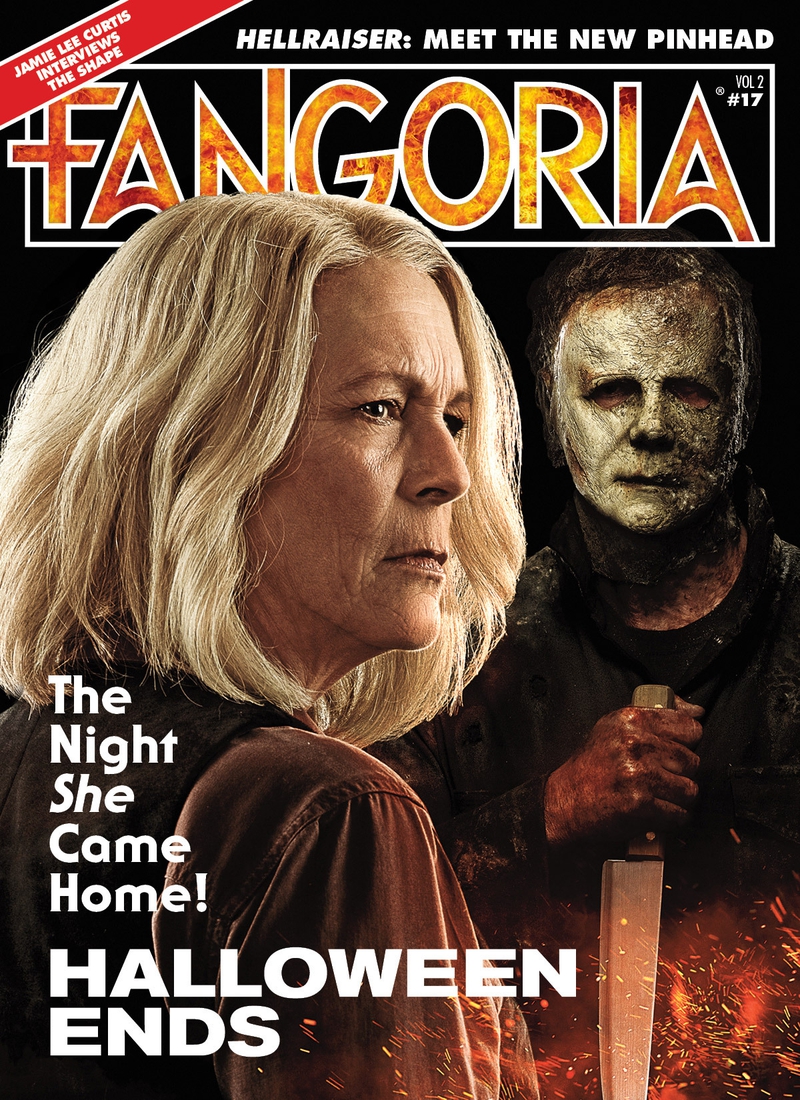
FANGORIA 1978: Fangoria is a US magazine that was first published in 1978 to focus on Sci-fi films, but became specifically horror concentrated after the success of the film Dawn of the Dead. It has since widened its media content to include radio, film production and film festivals. It focuses on the culture surrounding the genre rather than just the films themselves.


SFX 1995: SFX began in 1995 and specialises in sci-fi and cult entertainment within both film and television. While still niche it has the potential to go beyond a specific genre and provides for the target audience that are passionate about fiction, alternative films, games, literature and comics. The official website explains that the SF stands for Sci-fi. It is designed for a hardcore, loyal audience but is accessible for the wider, mainstream audience in certain ways.


AUDIENCE RESEARCH: DEFINING THE AUDIENCE


Wednesday, March 8, 2023

INDUSTRIAL CONTEXT: RESEARCH INTO BAUER MEDIA

 Bauer Media: Bauer Media Group is one of the world’s largest privately-owned media business with media assets worldwide. Founded in Hamburg in 1875, the Bauer Media Group reaches 200 million consumers and operates in 14 countries such as Finland, France, Germany, Israel, Norway, Spain, Sweden, UK, Ireland and the USA. Bauer Media UK is part of the wider Bauer Media Group and is the No.1 UK Publisher. An entertainment network of multi-platform brands that reaches 25 million consumers through telling stories that deliver cultural impact. Magazines and radio stations include Absolute Radio, Empire (its film magazine), Grazia, Kiss FM, Magic Radio, Tv Choice and many more. Empire, founded in 1989, labels itself the world’s most influential film and entertainment brand. Encompassing a print magazine, podcast, website, digital edition and live events, ‘nobody speaks to more film fans across the world with more authority’. They collaborate with the biggest film studios and distributors and world-class filmmakers and actors to create content that no other brand has. From interviewing Tom Cruise to being on set with Quentin Tarantino, their content is like no other. They consist of writers, critics, photographers and illustrators, with every piece of its content considered to become a premium, polished magazine that leaves its audience coming back to Empire every day.


Tuesday, March 7, 2023

PLANNING: BRIEF I HAVE CHOSEN

 Currently, I'm considering either doing Brief 3: Magazines and online or Brief 4: Music Video and online. I am drawn to the Magazine firstly because I think I will really enjoy the topic of film and have a pretty good knowledge of the subject. I will have fun creating ideas and researching for inspiration for the project. Also, I like creating layout and focusing on attention to detail when positioning of things so think I would enjoy creating the graphics for my covers, as well as creating the overall aesthetic of the photos and the overall brand of the magazine. However, I also really like the idea of a narrative music video, I think it would be a new and different experience to create something of my own and immediately had ideas for songs to use. I love music so would enjoy using my imagination when listening to the songs to create a narrative that fits. However, as I’ve never done something like this before I’m not sure if I would be able to execute my ideas the way i want, although I’m sure with practice i could be capable.


Monday, January 16, 2023

The Big Issue audience profile

 I created an audience profile on Big Issue reader based on demographic research:


STATEMENT OF INTENT